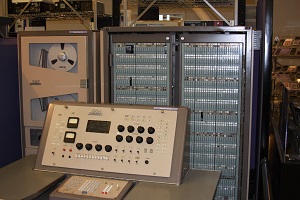
Remember when legacy meant the mainframe?
Advances in technology mean that many corporations are looking to modernise and replace client server applications or data warehouse platforms that were deployed within the last decade. Client server is the new legacy.
Tweet
Whether this deployment will be to the cloud – or to simpler more cost-effective technologies deployed in-house – a common challenge faces the developer
How do we ensure that our new design meets existing requirements?
Legacy data warehouses have been built up over time to consolidate data sets to meet the varying needs of a multitude of business stakeholders, each with their own, special reporting needs.
The data models, similarly, have been designed with these stakeholders’ needs in mind. Typically, these models have grown organically to meet additional and varied needs over time.
A new, optimised model may be desirable to provide enhanced performance. Or it may be necessary to meet changing demands – think “privacy by design” or the new aggregation demands being driven by globalisation.
How can you ensure that your new design still runs the old reports?
Enter data sufficiency analysis
Data sufficiency analysis means making sure that every column in the existing data warehouse maps to a similar column in the planned structure.
Similarly, data aggregations and transformations may be built into the structure of the existing warehouse, in the form of stored procedures, that must be reverse-engineered and replicated.
Trying to do this manually is an exercise in pain.
It can run to many thousands of man-hours and experience shows that this will still leave unidentified gaps in the process.
These gaps introduce risks into the development phase that may well mean redevelopment or a failure to deliver existing reports to key stakeholders.
The difference offered by Manta tools
MANTA automates technical metadata discovery and lineage across a range of common database systems, ETL tools and reporting platforms presenting results in an intuitive GUI front end.
In one case study MANTA was able to analyse and document a complex enterprise data warehouse environment – including data structures, SQL scripts and ETL processes – in days, saving thousands of man-hours, reducing risk and ensuring that existing needs were catered for in the planned design.

Talk to us to understand how using MANTA can help you
 Data Quality Matters
Leave a comment