
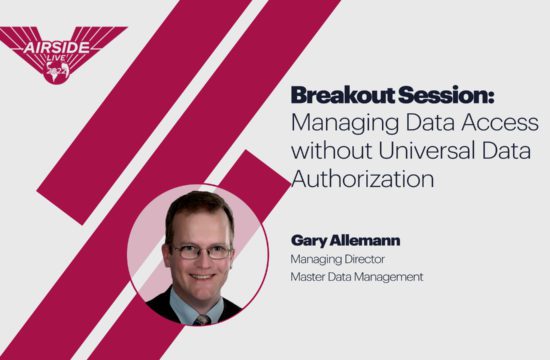
In late May, I had the privilege of joining a group of data leaders and pioneers at Airside 22, all dedicated to building the data trust revolution.
During this insightful gathering, I had the opportunity to share a compelling case study that stemmed from our data governance implementation for an international financial institution. This project was an integral part of their data warehouse modernization efforts, and it brought to light the complexities and challenges of ensuring data access without compromising security.
Modernization in the Cloud Era
The primary objective of the data warehouse modernization project was to migrate the entire warehouse to the cloud. The advantages of such a move are well-documented: scalability, flexibility, cost-efficiency, and improved accessibility. However, the challenge was not simply relocating data; it was also about transforming the way business intelligence was delivered within the organization.
Traditionally, business intelligence systems operated under a controlled environment where access to data was tightly regulated. This was necessary to ensure data security and privacy. But as organizations strive to empower their teams with data-driven insights, a new approach is needed. The goal was to shift from a controlled model to a self-service model, where authorized users could access the data they needed, when they needed it, without compromising security or inappropriately exposing sensitive information.
Navigating the Security Tightrope
This shift towards self-service business intelligence presented a unique challenge – how to strike a balance between openness and security. It was imperative to prevent a scenario where data became a free-for-all resource, potentially exposing sensitive information to unauthorized individuals. The solution lay in crafting a data authorization framework that allowed for selective access while maintaining strict controls over sensitive data.
The Role of Data Governance
At the heart of this transformation was a robust data governance strategy. Data governance is not merely about establishing rules and regulations; it’s about creating a culture of responsible data management. In our case, it meant defining clear data ownership, documenting data lineage, and creating an access control framework that adapted to the changing landscape of data usage.
Mistakes and Lessons Learned
Every journey is fraught with challenges and, at times, missteps. During my talk, I had the privilege of sharing some of the mistakes we made and the valuable lessons we learned along the way. Transparency in acknowledging these missteps is vital for continuous improvement in the field of data governance.
A Wealth of Insights
Beyond my own presentation, the Airside 22 event offered a wealth of insights from a diverse group of speakers. If you’re involved in data governance, data security, or data privacy, you’re likely to find a trove of valuable information in the talks.
You can explore the complete list of talks here: Airside 22 Talks
In Conclusion
The journey of modernizing data access is a complex but necessary one in the age of data-driven decision-making. It requires a delicate balance between openness and security, and the foundation of this transformation lies in effective data governance. By sharing our experiences, mistakes, and lessons learned, we hope to contribute to the broader conversation around data access and authorization in an increasingly data-centric world.
As we move forward, let’s continue building the data trust revolution, one step at a time.
 Data Quality Matters
Leave a comment