Data is at the heart of every decision your business makes. It informs strategies, shapes customer experiences, and drives growth. Yet, without a structured approach to managing your data, you might find yourself swimming in a sea of information with no clear direction. Enter data governance – the compass that guides your data ship.

In this article, we’ll explore the essential steps to kickstart or revamp your data governance program. Whether you’re a newcomer to the world of data governance or have previously attempted it with less-than-stellar results, we’ll help you navigate the treacherous waters of data management to align with your business’s overarching goals.
Starting at Square One
To borrow a line from a classic song, “Let’s start at the very beginning, a very good place to start.” The very beginning of a successful data governance program involves answering a simple yet profound question: What business outcomes will we enable with our data?
Avoiding Common Mistakes
The most common mistakes we see in data governance implementations are a focus on structures rather than outcomes, a lack of clear purpose, and trying to do too much, too soon.
This approach may look something like this:
- Set up a data governance council or forum
- Assign data stewards
- Hold a weekly (or monthly) data governance meeting
- Attend meetings and debate the definition of customer
- Wonder why people stop coming…
Data governance isn’t about creating intricate structures or holding endless meetings. It’s about ensuring your data management efforts align with your business objectives. Start by identifying one or two key business imperatives that data can significantly impact. This focused approach allows you to engage a small group of stakeholders who genuinely care about achieving a successful outcome.
When implementing your data governance framework, begin with a review of both your business strategy and data strategy. The former outlines your business goals and objectives, while the latter highlights the data management capabilities required to meet those goals. This dual perspective will identify the key decision-makers needed for effective governance to meet your business objectives.
Understanding Your Data Culture
Once you’ve identified your priorities and the relevant stakeholders, the next step is to develop what we call “tactical empathy.” This involves framing your data governance approach in a way that resonates with your stakeholders and organization. To do this effectively, consider your organization’s decision-making style:
- Centralized vs. Decentralized: Is your organization’s decision-making process highly centralized, with a rigid structure, or more decentralized, granting substantial autonomy to lower-level management?
- Current Data Usage vs. Future Goals: How does your organization currently use data, and how would you like to use it in the future? Are decisions based on gut feeling or driven by data analytics and consensus?
The answers to these questions will shape your data governance structures and processes to fit your organization’s data culture and maturity. At this early stage, focus on delivering results. Your data governance organization should be as small as possible, facilitating communication and decision-making among affected stakeholders. Be prepared to adapt it based on lessons learned along the way.
Securing a Mandate
It might seem obvious, but many data governance initiatives stumble due to a lack of a clear mandate. When launching your program, aim for executive support to establish the initial framework. Consider creating a simple Data Governance Charter, a document that confirms the executive commitment to the data governance program. This charter should outline high-level objectives and the level of authority granted to the program.
To create this charter, leverage your data strategy, which aligns data with specific business goals, and your data management gap assessment and roadmap, which detail the capabilities needed to achieve those goals. Armed with these three essential documents – the data strategy, data management roadmap, and the Data Governance Charter – you’re well-prepared to kickstart your data governance program with confidence.
Seeking Further Guidance
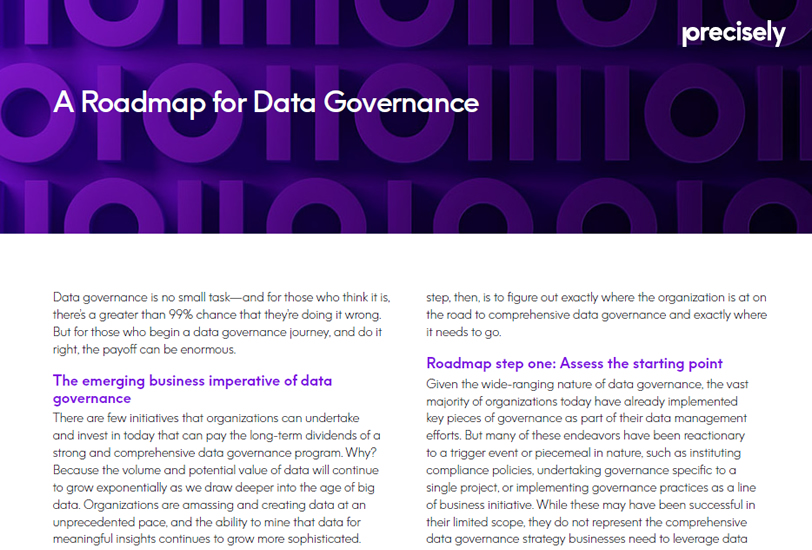
In your journey towards effective data governance, it’s beneficial to explore more comprehensive frameworks and best practices. Our partner, Precisely, delves into a roadmap for data governance that spans four critical steps. Implementing these steps correctly will yield significant payoffs in terms of data quality, strategic alignment, and overall business success.
In conclusion, data governance is not a one-size-fits-all approach. It begins by identifying your business objectives, adapting to your organization’s data culture, and securing executive support. By following these fundamental steps, you’ll not only kickstart or revamp your data governance program but also unlock the true value of your enterprise’s information assets. So, don’t wait – start formalizing your data governance capability today and pave the way for data-driven excellence.
 Data Quality Matters
Leave a comment