
Analytics engines play a pivotal role in extracting meaningful insights from vast amounts of information. Businesses and organizations rely on these advanced tools to make informed decisions, optimize processes, and gain a competitive edge.
- Table of Contents
- Understanding Analytics Engines
- Unveiling Hidden Stats for Powerful Analytics with Quality Data
- The Importance of High-Quality Data
- Impact of Quality Data on Analytics Engines
- Challenges in Data Quality
- Strategies for Ensuring Data Quality
- Real-Life Examples of Data Quality Impacting Analytics Engines
- The Future of Data Quality and Analytics
- Conclusion
- FAQs
- How does data quality impact analytics engine performance?
- What are the consequences of using poor-quality data for analytics?
- How can organizations address data security concerns while maintaining data quality?
- Are data quality tools expensive?
- How can businesses stay ahead in the era of data-driven decision-making?
However, the effectiveness of analytics engines is directly correlated with the quality of the data they receive. In this article, we explore the significance of high-quality data in maximizing the potential of analytics engines and achieving accurate, reliable results.
Addressing common data quality issues is essential for ensuring data integrity and usability. Gain insights into these challenges by exploring a blog post that outlines the ten biggest data quality issues you might face
Table of Contents
- Understanding Analytics Engines
- Unveiling Hidden Stats for Powerful Analytics with Quality Data
- The Importance of High-Quality Data
- Impact of Quality Data on Analytics Engines
- Challenges in Data Quality
- Strategies for Ensuring Data Quality
- Real-Life Examples of Data Quality Impacting Analytics Engines
- The Future of Data Quality and Analytics
- Conclusion
- FAQs
Understanding Analytics Engines
Analytics engines are sophisticated software systems, ranging from old favourites like Microsoft Excel to new AI-driven players like ThoughtSpot, that process and analyze data to discover patterns, trends, and relationships. They utilize various algorithms and statistical techniques to convert raw data into actionable information. These engines can be applied in diverse fields, such as marketing, healthcare, finance, and more, to derive valuable insights that drive growth and innovation.
Unveiling Hidden Stats for Powerful Analytics with Quality Data
Forget “garbage in, garbage out” – the world of data analytics is evolving beyond mere data hygiene. To truly unleash the potential of your analytics engines, it’s time to delve into the hidden gems of data quality:
1. The Value of Data Lineage:
- Stat: Organizations with robust data lineage practices see a 25% reduction in time spent resolving data discrepancies, leading to faster and more accurate insights. (Source: Forrester Research, 2023 Data Management Trends Report)
- Breakdown: Knowing the origin and transformation journey of your data isn’t just for compliance. It empowers deeper trust in your analytics by pinpointing data issues at their source and preventing cascading errors.
2. The Bias Blind Spot:
- Stat: Only 23% of organizations actively monitor their data for potential biases, leaving their analytics vulnerable to skewed results and unfair outcomes. (Source: Gartner, 2023 Data Management Survey)
- Breakdown: Data itself can inherit biases from its sources. Unmasking these hidden biases through proactive monitoring is crucial for responsible AI and ensuring your analytics serve everyone, not just a select few.
3. The Contextual Catalyst:
- Stat: Integrating external contextual data sources, like weather patterns or economic indicators, into analytics models can boost predictive accuracy by up to 30%. (Source: McKinsey & Company, 2023 Big Data Analytics Report)
- Breakdown: Data in a vacuum tells only half the story. Enriching your data with relevant external context adds depth and nuance, leading to more robust and actionable insights.
4. The Collaborative Cure:
- Stat: Organizations with a strong culture of data collaboration, where data analysts and business users work together, see a 40% increase in successful analytics implementations. (Source: IDC, 2023 Data Governance Benchmark Report)
- Breakdown: Data quality isn’t just a technical challenge. Fostering open communication and shared ownership over data quality ensures everyone understands its importance and contributes to its ongoing improvement.
5. The Human in the Machine:
- Stat: While AI automates data cleaning tasks, human expertise remains critical for identifying complex data anomalies and making strategic data quality decisions. (Source: Deloitte, 2023 State of AI in Business Report)
- Breakdown: Don’t get swept away by automation hype. Trusting your data scientists and analysts to interpret patterns, assess risks, and guide data quality efforts is key to maximizing the effectiveness of your analytics engines.
The Importance of High-Quality Data
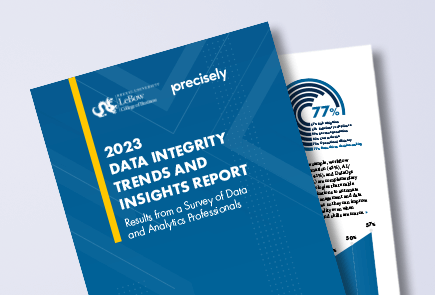
Research shows that poor data quality is a systemic issue, affecting everything from the ability to integrate data successfully, to the ability to leverage and trust data for decision-making. Improving data quality requires a systemic approach.
70% of those with low levels of trust in their data pointing to data quality as the biggest challenge to making confident decisions
2023 Data Integrity Trends and Insights Report
Accurate Data Collection
The foundation of effective analytics is built upon accurate data collection. If the data input is flawed or contains errors, the output generated by analytics engines will be equally erroneous. Therefore, organizations must focus on implementing robust data collection mechanisms to ensure the accuracy and reliability of the data being fed into the analytics engines.
Validating Data Sources
Verifying the authenticity and credibility of data sources is crucial. Using data from unreliable sources can lead to misleading conclusions and adversely affect decision-making processes.
For example, automated data lineage and provenance checks can confirm the origin of the data sets being used for analysis, but may not be enough, while data profiling and data quality assessments can confirm that the data is useful for your proposed purpose.
Validating data sources is a critical step in maintaining the quality of data used for analysis.
Data Preparation and Preprocessing
Raw data often contains inconsistencies, duplications, and irrelevant information. Data preparation and preprocessing involve refining the data before analysis. By eliminating noise and redundancies, analytics engines can work more efficiently, yielding more accurate results.
Media and Telecommunication giant, Comcast, for example, uses Data360 Analyze to both profile and standardise large volumes of data, allowing them to rapidly deploy and analyse blended data sets to improve the billing process, detect potential fraud, and enhance
71% of respondents reported that their organizations spend 25% or more of their work time preparing data for reporting and decision-making
2023 Data Integrity Trends and Insights Report
Impact of Quality Data on Analytics Engines
Enhanced Decision-Making
High-quality data empowers businesses to make well-informed decisions. When analytics engines receive reliable data, the insights generated become trustworthy and serve as a solid foundation for strategic planning and execution.
Improved Performance and Efficiency
Analytics engines rely on data to perform their tasks. By providing them with high-quality data, organizations can optimize their engine’s performance and achieve faster and more efficient data analysis.
Reliable Predictions and Insights
Quality data enhances the credibility of predictions and insights derived from analytics engines. Whether it’s forecasting market trends or predicting customer behaviour, accurate data results in more reliable outcomes.
Challenges in Data Quality
Data Inconsistency
Data inconsistency occurs when the same information is represented differently across various sources or databases. This inconsistency can lead to confusion and unreliable analytics outputs.
Missing and Incomplete Data
Incomplete data sets hinder the performance of analytics engines and can cause biased results. Organizations must implement measures to address and fill gaps in data collection.
Stale Data
Stale data can lead to inaccurate and misleading insights. This is because the data doesn’t reflect the current state of the system or business. Another challenge is that outdated data does not lend itself to predictive analytics, as it only shows outdated patterns and trends. Organisations must implement measures to ensure that data is regularly refreshed.
Strategies for Ensuring Data Quality
Establish Data Governance
Data governance refers to the overall management of data, including defining data quality standards, data ownership, report certifications, and data access policies. A robust data governance framework ensures that data is accurate, consistent, and secure.
Regular Data Quality Audits and Reviews
Regular data quality audits and reviews are essential to identify and rectify data quality issues promptly. Periodic assessments help maintain the accuracy and relevance of the data being used.
Invest in Data Quality Tools
Numerous data quality tools are available that can help organizations cleanse, validate, and enrich their data. Investing in such tools can significantly improve data quality and, in turn, analytics engine performance.
Real-Life Examples of Data Quality Impacting Analytics Engines
Saving Millions in Billing Processing Inaccuracies
Persistent over-billing and under-billing discrepancies resulted in substantial financial ramifications for this Fortune 200 communications service provider, not only causing direct losses running into millions of dollars per annum, but also exposing the company to customer unhappiness, potential litigation and reputational damage. By implementing data quality checks and addressing problems at source, the company dramatically increased billing accuracy.
Improved Membership Visibility and Insights
Duplicate customer records across systems and plans affected this large US Healthcare provider’s ability to understand either the membership process and to build an accurate understanding of key membership metrics. The company’s decision to reinvent its member onboarding process, incorporating automated data quality checks to improve data collection and remove duplicates, is delivering accurate analytics to improve operational efficiencies and provide more tailored member experiences.
Supply Chain Data Optimization
Within Babcock’s M&T Division, the Supply Chain function plays a pivotal role, overseeing the comprehensive spectrum of supply chain operations. Addressing the intricate data challenges within the supply chain was paramount and drove a 23% increase in supplier master data quality.
Data is the DNA of our supply chain. Data completeness and accuracy are critical to our current and future operations in an increasingly competitive market
Andy Chapell, Head of Supply Chain Capability, Babcock
The Future of Data Quality and Analytics
The future of data quality and analytics is brimming with exciting possibilities and transformations, driven by advancements in technology, evolving business needs, and the increasing reliance on data-driven decision-making. Here are some key trends shaping the future:
Democratization of data analytics:
- With the rise of user-friendly analytics platforms and tools, data analysis will no longer be confined to data scientists and analysts. Business users will be empowered to explore and analyze data on their own, leading to more data-driven decisions across all levels of the organization.
- Collaborative analytics platforms will enable teams to share data, insights, and models, fostering a culture of data-driven decision-making and knowledge sharing.
Real-time and streaming analytics:
- Traditional analytics approaches based on static data snapshots are becoming obsolete. Businesses are increasingly demanding insights from real-time and streaming data sources to make faster, more informed decisions.
- Analytics engines will be optimized to handle real-time data streams, enabling businesses to react to changing conditions and opportunities in real-time.
Integration of data across diverse sources:
- Businesses are collecting data from a growing number of diverse sources, including internal systems, social media, IoT devices, and external data sources.
- Data platforms will need to be capable of integrating and harmonizing data from these diverse sources to create a unified view of the business and enable comprehensive analysis.
Explainable AI and bias detection:
- As AI becomes more integrated into data analytics, ensuring transparency and explainability of AI models will be crucial.
- Businesses need to understand how AI models are making decisions and identify any potential biases to ensure fairness and ethical use of AI in data analysis.
Data privacy and security:
- With the growing importance of data, data privacy and security will remain paramount.
- Businesses need to implement robust data governance frameworks and utilize advanced security technologies to protect sensitive data and comply with evolving regulations.
The future of data quality and analytics holds immense potential for businesses to gain deeper insights, make better decisions, and drive innovation. By embracing these trends and investing in the right tools and technologies, businesses can stay ahead of the curve and unlock the true potential of their data.
In addition to these trends, several other exciting developments are shaping the future of data quality and analytics, including:
- The rise of blockchain technology: Blockchain-based platforms can ensure data provenance, traceability, and immutability, promoting trust and security in data analysis.
- The emergence of quantum computing: Quantum computing has the potential to revolutionize data analysis by enabling faster and more efficient processing of massive datasets.
- The evolution of natural language processing (NLP): NLP advancements will allow users to interact with data and analytics tools using natural language, further simplifying data analysis for non-technical users.
These are just a glimpse into the exciting future of data quality and analytics. As technology continues to evolve, we can expect even more advancements and innovations that will unlock the full potential of data to transform businesses and societies.
Conclusion
The effectiveness of analytics engines is unquestionably linked to the quality of data they receive. By embracing these insights, you can unlock the true potential of your analytics engines, drive responsible and accurate decision-making, and ensure your data fuels success, not biases or blind spots.
So, are you ready to redefine data quality and unleash the hidden power of your analytics engines? The choice is yours – choose wisely and watch your insights soar!
FAQs
How does data quality impact analytics engine performance?
Data quality directly affects analytics engine performance by influencing the accuracy and reliability of the insights generated. High-quality data leads to more trustworthy results and better decision-making.
Assess the suitability of Excel as a tool for analytics and data management tasks. Explore the impacts of data quality errors on Excel-based analytics, particularly in scenarios like COVID-19 tracking
What are the consequences of using poor-quality data for analytics?
Using poor-quality data for analytics can lead to incorrect predictions, misleading insights, and flawed decision-making. It can also result in missed opportunities and potential financial losses.
Learn effective strategies on how to deal with incomplete data and turn challenges into opportunities. Discover innovative approaches amidst data scarcity in critical scenarios, such as responding to COVID-19
How can organizations address data security concerns while maintaining data quality?
Organizations can address data security concerns by implementing robust data encryption, access controls, and regular security audits. Data quality and security should go hand in hand to protect sensitive information.
Are data quality tools expensive?
The cost of data quality tools can vary depending on the features and capabilities they offer. However, investing in these tools is a worthwhile long-term investment for organizations seeking to enhance their analytics capabilities.
How can businesses stay ahead in the era of data-driven decision-making?
To stay ahead in the era of data-driven decision-making, businesses should prioritize data quality, foster a data-driven culture, and continuously adapt to emerging technologies in the analytics field.
 Data Quality Matters
Leave a comment