
Data has become an invaluable asset for organizations of all sizes. However, managing and leveraging this data effectively presents a range of challenges. Let’s explore the top data management obstacles organizations are facing today.
- Data Analytics and Artificial Intelligence
- Data Governance
- Data Quality Issues
- Data Volume and Velocity
- Data Cataloging and Metadata Management
- Data Integration and Silos
- Data Privacy, Security, and Compliance
- Data Cost Management
- Conclusion: A Brighter Data-Driven Future in 2025
Data Analytics and Artificial Intelligence
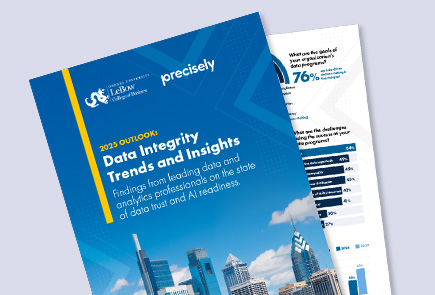
According to the 2025 Data Integrity Trends and Insights report, 76% of respondents prioritize data-driven decision-making as the core objective of their data programs, with 60% recognizing advanced analytics and AI as the main forces shaping data strategies.
However, a significant barrier to AI adoption is the scarcity of skilled professionals, with 60% of organizations facing a shortage of talent. To overcome this gap, consider enrolling your team in certification programs such as our Data Analytics Certified program to help build the necessary expertise.
Data Governance
Data governance remains a major hurdle for organizations, with 62% of respondents citing it as the leading barrier to AI adoption. Effective data governance is essential to ensure data quality, security, and ethical use—key factors for the successful implementation of AI initiatives.
Data Quality Issues
The rapid evolution of advanced analytics, BI, and AI has magnified the risks tied to poor data quality. Inaccurate or incomplete data can result in flawed insights and poor decisions, ultimately leading to significant business losses.
A lack of automated data quality tools is a primary concern for 49% of respondents, highlighting the urgent need for solutions that streamline data quality processes and improve data reliability.
Data Volume and Velocity
The ever-growing volume of data continues to pose challenges, with 43% of organizations identifying it as a top concern in 2024, up from 35% in 2023. Data comes from diverse sources—social media, IoT devices, and traditional business systems—which complicates storage, processing, and timely analysis.
Data Cataloging and Metadata Management
The increasing adoption of data mesh and data fabric architectures, which have risen by 5% to 18% in 2024, reflects a growing demand for democratized, self-service data.
These data architectures rely on robust metadata management and governance, reshaping data management strategies. As a result, 25% of respondents prioritize data catalogs in 2024 to facilitate data discovery and usage.
Effective data cataloging and metadata management are critical for locating, understanding, and leveraging data assets. Without a comprehensive metadata strategy, organizations may struggle to find the right data and unlock its value.
Data Integration and Silos
Data often exists in silos across various systems and departments, hindering integration and analysis. Breaking down these silos is essential to achieving a unified data view.
Integrating data from a range of sources—structured, semi-structured, and unstructured—can be complex. To overcome this, organizations must adopt data integration tools and strategies.
A notable 50% of respondents still point to data quality issues as the primary challenge in data integration projects, underlining the need for robust data quality management practices.
Data Privacy, Security, and Compliance
Data privacy and security are top priorities for 45% of organizations. With increasing concerns over data breaches, ensuring the integrity and protection of sensitive information is critical.
Organizations must comply with various data privacy regulations, such as PoPIA and GDPR.
To ensure compliance, they need strong data management practices and security protocols, including data masking, access controls, and regular audits.
Data Cost Management
The costs associated with storing, processing, and analyzing vast amounts of data are a major challenge for many organizations. For 54% of respondents, cost is the primary obstacle to the success of data programs.
Ineffective data management tools, poor data quality, and a lack of awareness contribute to rising costs and hinder progress.
Conclusion: A Brighter Data-Driven Future in 2025
To thrive in 2025, organizations must proactively address these data management challenges. By investing in data quality, security, and governance, companies can ensure the integrity and reliability of their data. Furthermore, leveraging advanced analytics and AI will enable organizations to derive powerful insights that drive innovation, optimize operations, and enhance decision-making.
Organizations that prioritize data management will gain a competitive edge in an increasingly data-driven world. Embracing data-driven strategies will help businesses unlock new opportunities, improve customer experiences, and achieve long-term success.
 Data Quality Matters
Leave a comment