Data fabric is an emerging architectural approach that aims to create a unified, integrated data landscape. By breaking down data silos and establishing a cohesive data fabric, organizations can improve data governance, quality, and privacy.

What is a Data Fabric?
A data fabric is an architectural approach that aims to create a unified, integrated data landscape. It combines data architecture and software solutions to centralize, connect, manage, and govern data across various systems and applications.
Key characteristics of a data fabric:
- Centralized Governance: A unified governance framework applies consistent policies across all data assets.
- Data Integration: Seamlessly integrates data from various sources, including on-premises and cloud-based systems.
- Data Quality: Ensures data accuracy, consistency, and completeness through automation and monitoring.
- Data Security: Protects sensitive data with robust security measures.
- Data Accessibility: Provides easy access to data for authorized users.
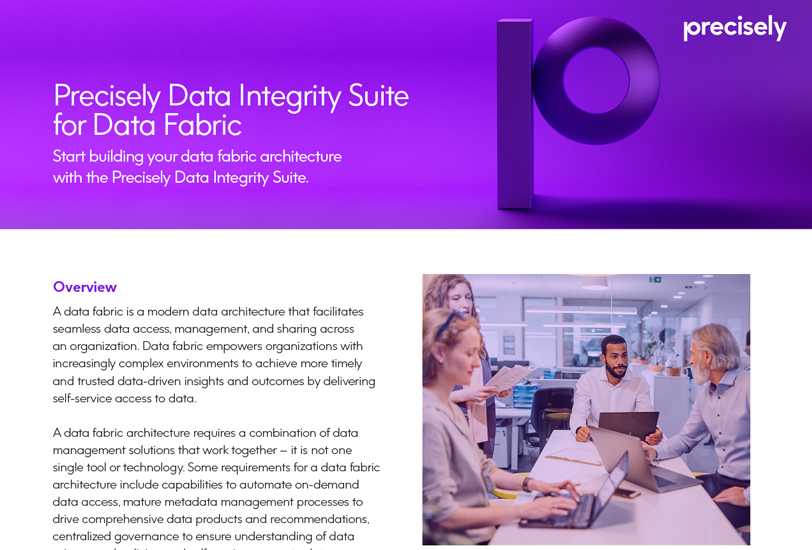
Preparing for a data fabric architecture?
Focus on these key priorities: automate data integration, manage metadata effectively, centralize governance, and enable self-service data access.
Learn more in the full Precisely solution sheet
Benefits of Data Fabric:
- Unified Data Access: Provides a single source of truth for all data, regardless of its location or format.
- Improved Data Quality: Ensures data consistency, accuracy, and completeness through automated data quality checks.
- Enhanced Data Governance: Enforces data standards and policies to protect data security and privacy.
- Accelerated Data Insights: Enables faster data analysis and decision-making by streamlining data access and integration.
- Increased Agility: Adapts to changing business needs by providing flexible and scalable data solutions.
By breaking down data silos and creating a unified data fabric, organizations can unlock the full potential of their data and drive innovation.
So how does a data fabric affect data management fundamentals?
Unified Data Governance
Data fabric promotes a unified governance framework that applies consistent policies across all data assets, regardless of their location. This centralized approach offers several benefits:
- Centralized Control with Flexible Access: Organizations can maintain centralized governance while allowing flexible access to data for different users based on their roles.
- Streamlined Compliance: A unified governance model simplifies compliance with regulations by ensuring that all data adheres to the same standards.
Enhanced Data Quality
Data fabric architectures often incorporate advanced technologies such as AI and machine learning to automate data integration and quality management processes. Key techniques include:
- Real-Time Monitoring: Continuous monitoring of data quality helps identify and resolve issues promptly.
- Data Lineage Tracking: Understanding the flow of data from source to consumption enhances transparency and accountability.
Privacy Management
Privacy is a paramount concern in a data fabric architecture. Centralized governance enables stronger controls over how personal information is managed. Key privacy strategies include:
- Comprehensive Security Frameworks: Robust security measures protect sensitive information against breaches.
- Compliance Automation: Automated tools help monitor compliance with privacy regulations, reducing the risk of violations.
By adopting a data fabric approach, organizations can unlock the full potential of their data, drive innovation, and make informed decisions. However, it’s essential to implement a well-defined governance framework, invest in data quality initiatives, and prioritize privacy to ensure the success of a data fabric.
Want to learn more about data fabric?
Take our Deciphering Data Architectures course as part of our CIMP in Data Architecture curriculum
 Data Quality Matters
Leave a comment