Data migration is a high-stakes endeavor. Whether you’re moving to a new cloud platform, upgrading systems, or consolidating databases, the process is fraught with risks: data loss, security breaches, compliance fines, and operational disruptions.
A robust data governance framework isn’t just a best practice—it’s your safety net. By implementing the right policies, you can ensure accuracy, security, and compliance while avoiding costly setbacks.
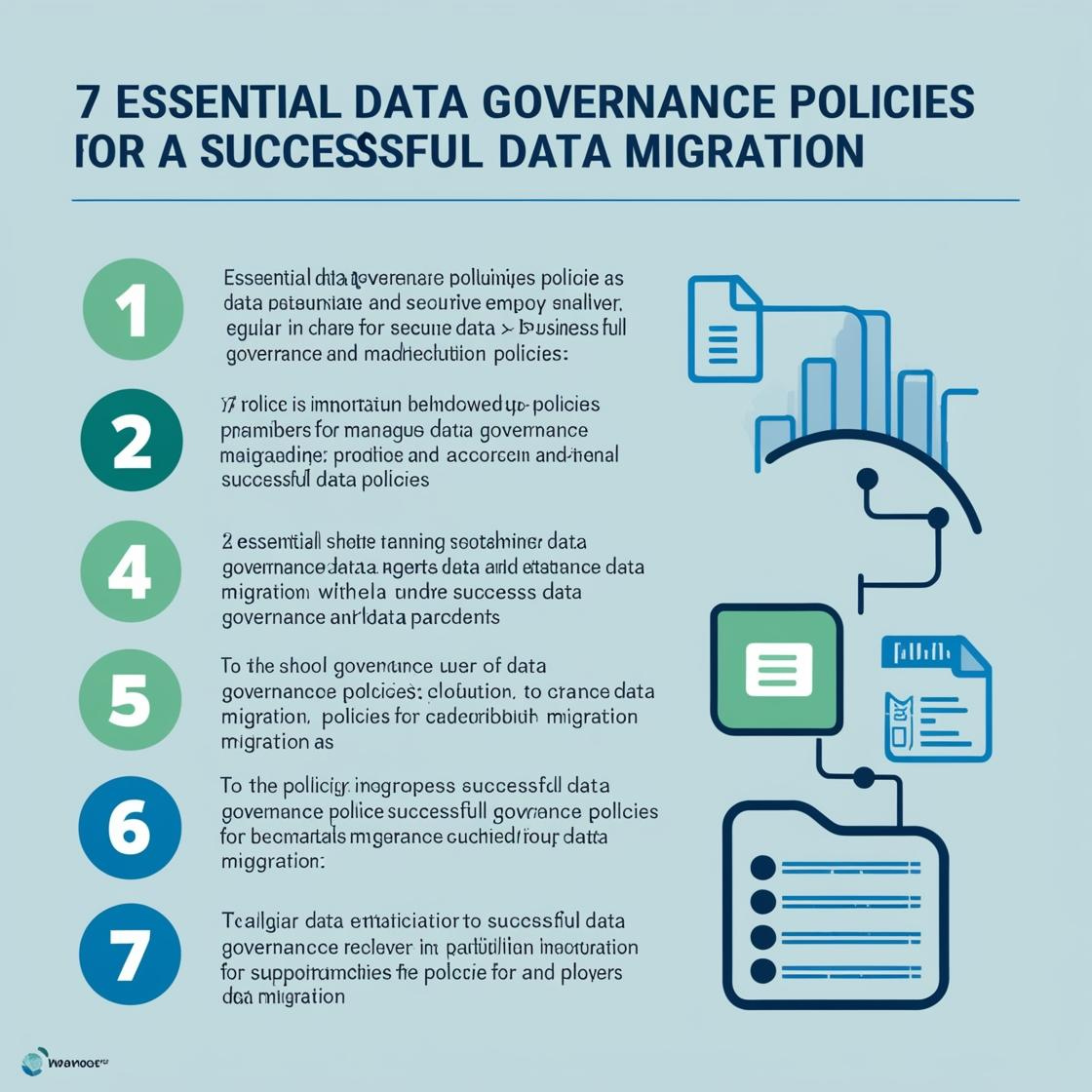
Below, we dive into the seven key data governance policies for data migration—complete with real-world scenarios to illustrate their importance.
- Data Quality Policies
- Security and Privacy Policies
- Regulatory Compliance Policies
- Data Mapping Policies
- Ownership and Accountability Policies
- Monitoring and Testing Policies
- Risk Management Policies
- Conclusion
Data Quality Policies
Poor-quality data derails migrations faster than technical glitches. To prevent errors from propagating into your new system:
Data Profiling: Analyze source data to ensure alignment with target system requirements, such as field lengths or date formats.
Example: An e-commerce company profiles product SKU codes to ensure they align with the target system’s 10-character limit, truncating or reformatting codes that exceed it.
Data Cleansing Standards: Identify and fix duplicates, inconsistencies, and inaccuracies before migration begins.
Example: A retail company might deduplicate and merge customer records to avoid shipping errors post-migration.
Validation Rules: Automate checks for completeness (e.g., missing ZIP codes) and accuracy (e.g., valid email formats).
Example: A bank validates account numbers during migration by ensuring they match the format “XXX-XXXXXX” and checks for missing fields like “account type” (savings vs. checking).
Security and Privacy Policies
Data breaches during migration can cripple trust and incur fines. Protect sensitive information with:
Data Masking: Anonymize sensitive fields like credit card numbers during testing to prevent exposure.
Example: A telecom firm uses DataSunrise to dynamically mask credit card numbers (e.g., displaying “–-****-1234”) during test migrations to protect sensitive data
Role-Based Access Controls: Limit access to authorized personnel only
Example: A financial institution restricts access to Identity Numbers during migration to only the compliance team, using tools like DataSunrise and Active Directory to enforce permissions.
Encryption Protocols: Encrypt data both in transit (via TLS) and at rest (using AES-256) to thwart interception.
Example: A SaaS company encrypts customer payment data using AES-256 before migrating it to a new cloud database and ensures TLS encryption during transfer.
Regulatory Compliance Policies
Non-compliance with PoPIA, GDPR, or DPA can lead to massive penalties. Stay ahead by:
Audit Trails: Log every migration activity—who moved what, when, and how—for transparency during audits.
Example: A hospital logs every access and modification to patient health records (PHI) during migration using Splunk, creating a traceable record for privacy audits.
Compliance Checks: Validate that target systems support regulatory requirements (e.g., GDPR’s “right to be forgotten”).
Example: A South African retailer migrating customer data to a U.S.-based cloud platform ensures PoPIA compliance by mapping data residency requirements (e.g., ZA data stays in ZA or EU servers).
Data Mapping Policies
Misaligned data fields cause chaos. Ensure seamless transitions with:
Mapping Validation: Test mappings early to catch discrepancies, like mismatched data types (e.g., text vs. numeric fields).
Example: A manufacturing company discovers during testing that the source field “Order_Date” (MM/DD/YYYY) conflicts with the target’s “YYYY-MM-DD” format and updates the mapping rules to convert it automatically.
Source-to-Target Mapping: Define how source fields (e.g., “Cust_Name”) map to target fields (e.g., “Customer_FullName”).
Example: A university migrating student records maps the source field “Stu_ID” (a 6-digit number) to the target field “Student_ID” (an 8-digit alphanumeric code), adding leading zeros to align formats.
Ownership and Accountability Policies
Unclear ownership leads to finger-pointing when issues arise. Clarify roles by:
Defining Ownership: Document who “owns” each dataset and their responsibilities, from approval to post-migration reviews.
Example: During a retail merger, the CFO is designated as the owner of financial data, responsible for approving all mappings and validating post-migration balances.
Assigning Data Stewards: Designate experts to oversee data quality and compliance (e.g., a finance steward for billing data).
Example: A global logistics firm assigns a “supply chain data steward” to validate shipment tracking numbers during migration, resolving discrepancies in real time.
Monitoring and Testing Policies
Assumptions are dangerous. Continuously validate success with:
Post-Migration Testing: Compare source and target data samples to ensure no records were altered or lost.
Example: A bank runs SQL queries to compare 10,000 randomly selected customer records in the source and target systems, ensuring all account balances and transaction histories match.
Real-Time Monitoring: Use tools to track data quality and security metrics during migration
Example: A logistics company uses their ETL and Data Observability tools to monitor data transfer speeds and flag incomplete records (e.g., shipments missing destination ZIP codes) during migration.
Risk Management Policies
Even the best plans can fail. Mitigate risks with:
Rollback Strategies: Define steps to revert to the legacy system if critical failures emerge (e.g., data corruption in the target).
Example: An e-commerce platform prepares a rollback script to revert to its legacy database within 2 hours if the new system crashes during peak sales season.
Backup Procedures: Schedule daily backups of source data to enable recovery if corruption occurs.
Example: A media company performing a cloud migration backs up its entire content library daily using AWS S3 to prevent data loss if the migration fails.
Pro Tip: Use these examples as a starting point, but tailor policies to your industry’s unique needs. For instance, healthcare migrations demand stricter PHI controls, while fintech requires rigorous transaction auditing.
Conclusion
Data migration isn’t just a technical project—it’s a strategic initiative that demands rigorous governance. By implementing these seven policies, you’ll minimize risks, maintain compliance, and ensure high-quality data reaches its new home intact. Remember: the effort you invest in governance today will pay dividends in operational efficiency, customer trust, and regulatory peace of mind tomorrow.
Ready to streamline your next data migration? Start by auditing your current governance framework—and don’t hesitate to seek expert guidance to fill the gaps.


Leave a Reply