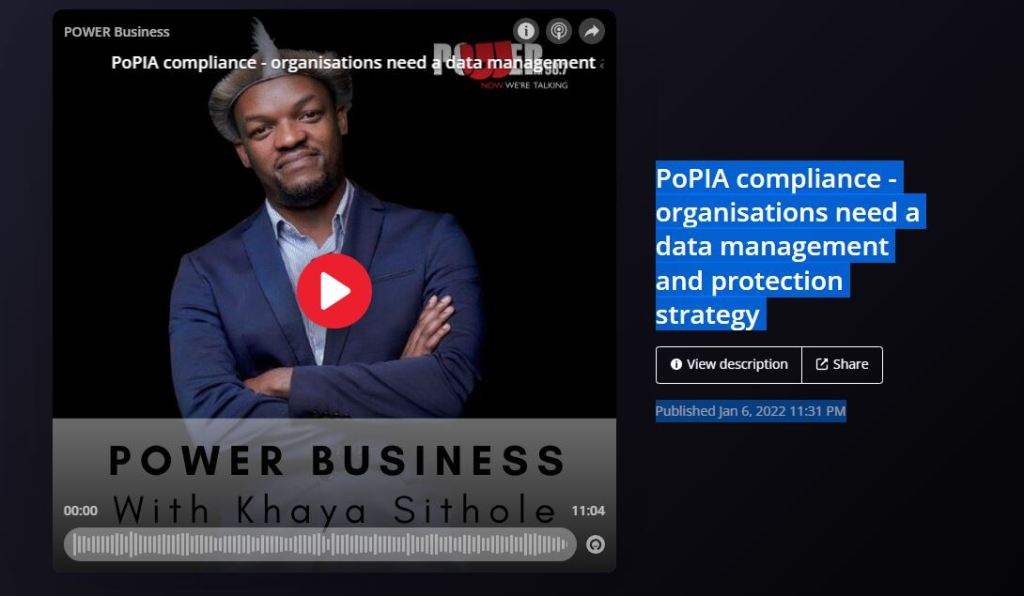
Last week, I had the privilege of engaging in a compelling conversation about PoPIA (Protection of Personal Information Act) compliance with Khaya Sithole on PowerFM. In an era where data privacy is of paramount importance, this discussion shed light on the crucial role organizations play in data management and privacy. In this article, we’ll delve deeper into the key takeaways from our conversation.
The PoPIA Landscape
Before we dive into the discussion, it’s essential to understand the PoPIA landscape. The Protection of Personal Information Act is South Africa’s response to global concerns about data privacy. It protects individuals’ personal information while outlining stringent requirements for organizations that handle this data.
The Act, which came into effect on July 1, 2020, has far-reaching implications for businesses. It mandates organizations to implement measures that safeguard the personal information they collect, process, and store. Failure to comply with PoPIA can result in severe consequences, including hefty fines and damage to an organization’s reputation.
Data Privacy as a Priority
During our discussion, Khaya Sithole emphasized that data privacy should be a top priority for every organization. In an increasingly data-driven world, individuals are becoming more aware of their rights concerning their personal information. This heightened awareness places greater responsibility on businesses to ensure the protection of customer data.
As we move further into the digital age, organizations must adopt a proactive approach to data privacy. Implementing robust data management strategies and compliance measures not only safeguards against legal repercussions but also fosters trust and goodwill among customers.

The Role of Data Governance
One recurring theme in our conversation was the importance of data governance in achieving PoPIA compliance. Data governance refers to the framework, policies, and practices that ensure data is accurate, secure, and accessible. It encompasses data quality, data security, and data management practices.
Effective data governance is crucial for PoPIA compliance because it provides a structured approach to managing personal information. It involves:
- Data Mapping: Identifying where personal data resides within an organization’s systems.
- Access Control: Restricting access to personal data to authorized personnel only.
- Data Quality: Ensuring that personal data is accurate, up-to-date, and complete.
- Incident Response: Having a plan in place to respond to data breaches and privacy incidents.
By implementing robust data governance practices, organizations can not only meet PoPIA compliance requirements but also enhance overall data quality and security.
Transparency and Accountability
Khaya Sithole stressed that transparency and accountability are at the heart of PoPIA compliance. Organizations must be transparent about how they collect, process, and store personal data. This includes providing clear privacy notices to individuals and obtaining their consent for data processing.
Additionally, organizations must appoint an Information Officer responsible for overseeing PoPIA compliance. This role entails ensuring that the organization complies with all aspects of the Act, including data breach reporting.
Data Protection Technologies
As we wrapped up our discussion, the conversation turned towards technology’s role in PoPIA compliance. It was clear that technology plays a pivotal role in enabling organizations to protect personal information effectively.
Here are some key technologies that organizations should consider:
- Data Encryption: Encrypting sensitive data to protect it from unauthorized access.
- Data Loss Prevention (DLP) Solutions: Implementing DLP solutions to monitor and control data movement.
- Identity and Access Management (IAM): Managing user access to systems and data to prevent unauthorized access.
- Data Masking: Masking or redacting personal data when it’s not required for a specific purpose.
- Privacy Impact Assessments (PIAs): Conducting PIAs to assess the privacy risks associated with data processing activities.
Conclusion
In conclusion, the discussion with Khaya Sithole highlighted the critical importance of PoPIA compliance in today’s data-centric world. Organizations must view compliance not merely as a legal requirement but as a fundamental element of their business strategy.
By prioritizing data privacy, implementing robust data governance practices, and leveraging appropriate technologies, organizations can not only navigate the complexities of PoPIA but also build trust with their customers and safeguard their reputation.
If you missed our conversation on PowerFM, I invite you to listen to it here. Feel free to share your thoughts and insights on this vital topic. Together, we can ensure a safer and more secure digital future for all.
 Data Quality Matters
Leave a reply to Boaz Cancel reply