Ensuring the accuracy and trustworthiness of reports is paramount for informed, data-driven decision-making. At the heart of this assurance lies a critical component: data observability. The journey toward report certification hinges on the ability to observe, scrutinize, and validate data effectively.
In this blog post, we delve deep into the pivotal role of data observability for report certification. From understanding its significance to exploring how it shapes the reliability of certified reports, join us as we uncover the essential connections between data observability and the assurance of trustworthy, actionable insights.
What is report certification and why is it important?
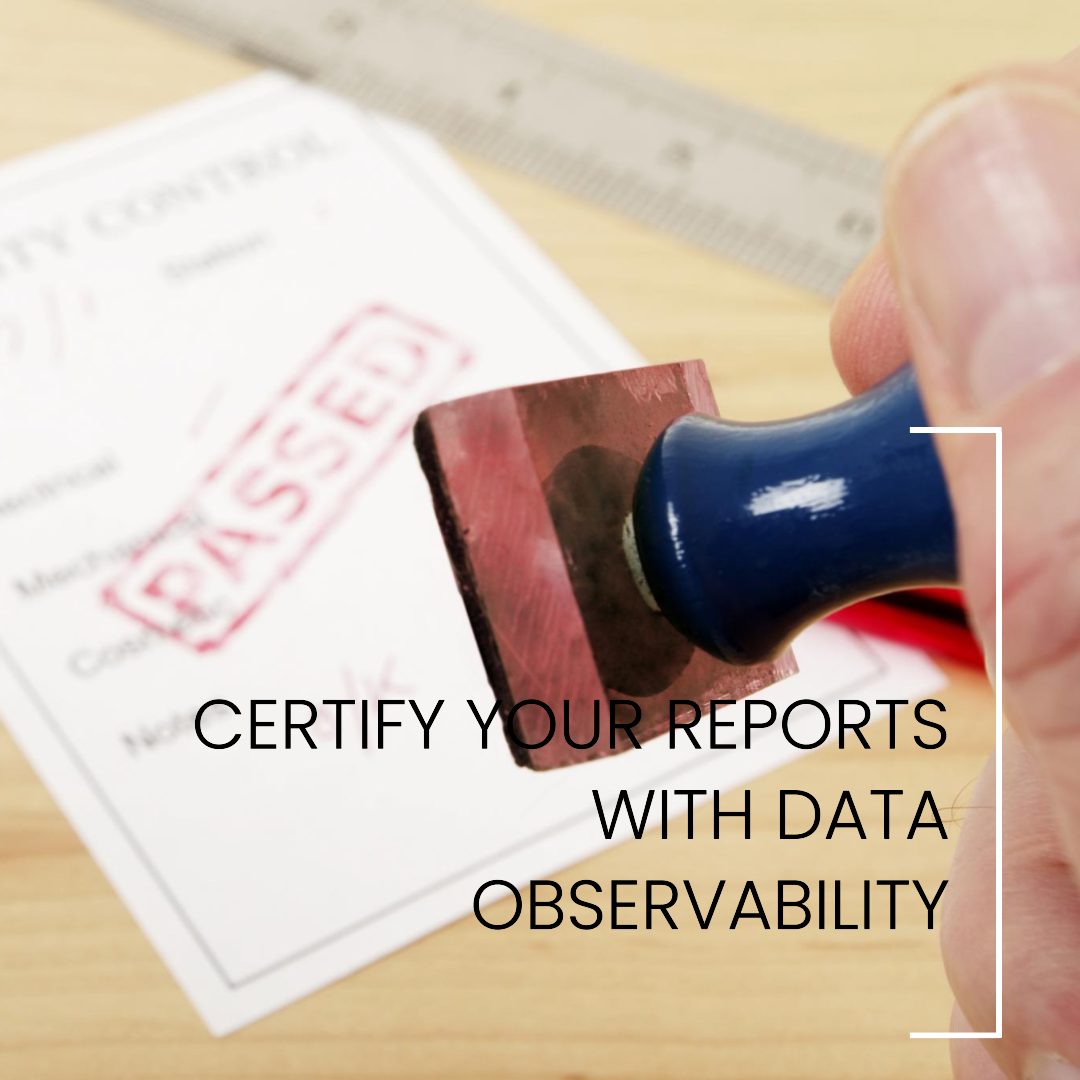
Report certification is an organizational procedure that validates the precision and dependability of data and reports. This involves scrutinizing an organization’s documented findings to confirm adherence to certification standards. The certification process often includes thorough testing and validation of reports to guarantee their intended functionality. By obtaining certification, reports become reliable resources, mitigating risk by offering users well-vetted information that has undergone a cost-effective validation process.
What is data observability?
Fundamentally, data observability embodies a thorough grasp of an organization’s data health and efficiency across its systems, data pathways, and analytical frameworks. It helps data teams proactively identify data errors, and pipeline issues, and locate the source of inconsistencies to strengthen data quality over time.
Why is data observability important for report certification?
Data observability is crucial for report certification for several reasons:
- Data Quality Assurance: Data observability tools and practices allow organizations to continuously monitor data as it flows through various pipelines and processes. This real-time monitoring helps identify data quality issues as they occur, ensuring that only accurate and reliable data is used in reports.
- Anomaly Detection: Data observability enables the detection of anomalies and deviations from expected data patterns. This is essential for report certification because it helps identify data inconsistencies or errors that may affect the reliability of the report’s insights.
- Data Lineage Tracking: Data observability solutions often provide visibility into data lineage, showing how data moves from source to destination. This lineage tracking is valuable for report certification because it allows certifiers to trace the origins of data used in reports and verify its accuracy and validity.
- Timeliness: Observability tools can monitor data pipelines for delays and bottlenecks. Timeliness is critical for report certification, as stakeholders rely on reports to make timely decisions. Data observability ensures that data reaches reports on schedule.
- Dependency Analysis: Reports often depend on multiple data sources and transformations. Data observability helps identify dependencies and their impact on report generation. Certifiers can ensure that all required data sources are available and functioning correctly.
- Regulatory Compliance: Many industries have regulations that require data to be monitored and audited to ensure accuracy and security. Data observability provides the necessary oversight and documentation for compliance, which is a key aspect of report certification in regulated environments.
- Issue Resolution: When data-related issues arise during report certification, observability tools can assist in identifying the root causes quickly. This enables efficient issue resolution, reducing downtime and disruptions in report generation.
- Performance Optimization: Observability can also help optimize data pipelines and processes. This is important for report certification because it ensures that reports are generated efficiently, meeting performance expectations and minimizing resource usage.
- Data Security: Observability tools can monitor data access and usage, helping to detect and prevent unauthorized access or data breaches. Data security is a critical consideration in report certification, especially when dealing with sensitive or confidential information.
- Continuous Improvement: Observability fosters a culture of continuous improvement in data processes. It allows organizations to learn from past issues and optimize data workflows, leading to more reliable and robust reporting over time.
- Communication and Collaboration: Observability tools often provide dashboards and alerts that can be shared with both technical and non-technical stakeholders. This promotes better communication and collaboration during the report certification process, ensuring that all relevant parties are aware of data issues and progress.
- Transparency: Data observability enhances the transparency of data processes, which is essential for building trust among stakeholders. Transparent data processes are more likely to result in certified reports that are seen as credible and reliable.
Best practices for implementing data observability in the report certification process.
Implementing data observability within the report certification process involves a set of best practices geared toward ensuring data accuracy, reliability, and utility. Here are key approaches to effectively integrate data observability:
Invest in tooling and training: Organizations should invest in data observability tools and training to attain full observability across their tech infrastructure. Collaborating with observability solutions vendors can help aggregate vast data volumes and establish connections between applications. Training or hiring IT professionals dedicated to observability is vital for managing these tools and educating staff in other departments about their significance.
Gain leadership support: Securing backing from leadership is pivotal for successful data observability implementation. It enables the allocation of necessary resources and emphasizes the priority of data observability within the organization. It also helps with identifying report owners for certification.
Standardize data sources: Standardizing data sources is crucial for effective data observability. Integrating numerous systems into observability software and dismantling data silos are essential steps to achieve comprehensive visibility and control over data.
Adhering to these best practices empowers organizations to enhance data observability in the report certification process, resulting in heightened data reliability, operational efficiency, and improved data management practices.
Conclusion
In summary, data observability is a critical component of report certification because it ensures the ongoing quality, reliability, and compliance of the data used in reports. It enables proactive monitoring, issue resolution, and optimization of data processes, ultimately leading to more trustworthy and valuable reports for decision-making.
Now read our post on why clearly defined business terms are important for report certification.


Leave a comment