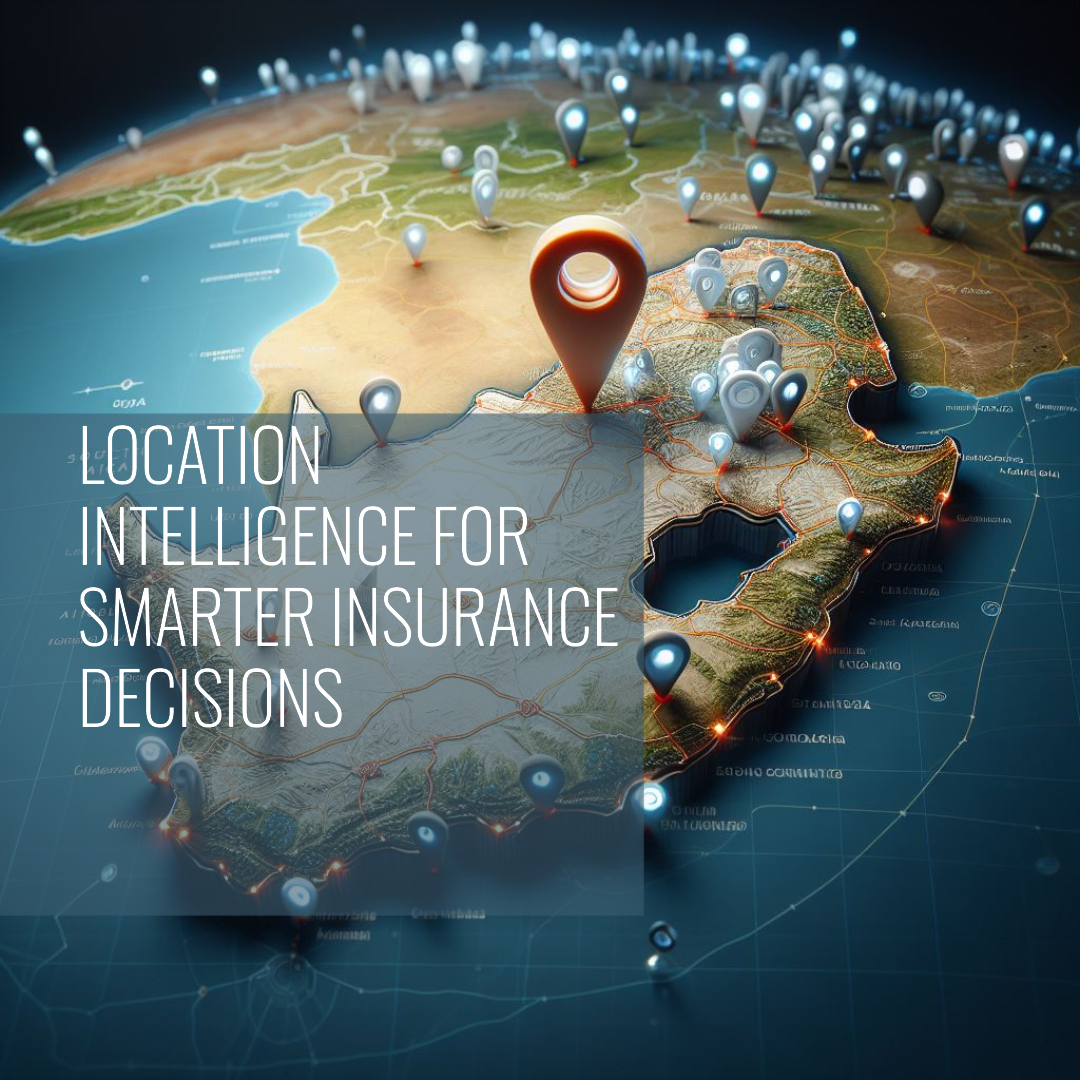
The insurance industry thrives on understanding risk. But what if you could go beyond basic information and truly grasp the spatial context of your data? That’s where location intelligence comes in, acting as a powerful GPS for insurers navigating the complexities of risk assessment, claims handling, and overall operational efficiency.
- Pinpointing Risks with Precision
- Sharper Risk Assessments & Underwriting:
- Streamlined Claims Handling:
- Enhanced Operational Efficiency:
- Uncovering Hidden Opportunities and Risks:
- The Future of Insurance: Informed by Location
Pinpointing Risks with Precision
Unlocking the power of advanced data analytics allows insurance companies to understand risks in more detail than ever. However, making the most of big data relies on maintaining accurate data.
For property and casualty insurance, this begins with knowing exactly where insured properties are located.
While data quality matters for insurance, ensuring data integrity goes beyond just being accurate, complete, and consistent. It also involves having rich contextual information.
For instance, to properly evaluate risk, insurers may need to know about nearby businesses, the distance between a property and flammable plants, or how traffic patterns impact emergency services’ speed.
Here’s how location intelligence empowers insurers:
Sharper Risk Assessments & Underwriting:
No longer just numbers on a page, policyholders become real people in real places. By considering factors like garaging location, crime rates, and natural disaster risks, insurers can assess risks with greater accuracy. This translates to fairer pricing and better risk management, leading to:
- Increased Revenue: Accurate risk assessment allows insurers to confidently price policies for high-risk areas, generating additional revenue.
Streamlined Claims Handling:
Location intelligence isn’t just about risk assessment. When disaster strikes, real-time data visualization tools pinpoint affected policyholders, allowing for:
- Faster Response Times: Quickly locate policyholders and assess damage, expediting the claims process and minimizing inconvenience.
- Mitigating Disaster Damage: Geospatial data helps insurers understand the impact of floods or other events, enabling them to take proactive steps to mitigate damage.
Enhanced Operational Efficiency:
Location intelligence isn’t just about catastrophes. By analyzing customer and resource locations, insurers can:
- Optimize Resource Allocation: Locate customers and resources effectively, ensuring adjusters are dispatched efficiently.
- Identify Sales Opportunities: Target low-risk areas with high growth potential, expanding their customer base strategically.
- Reduce Reinsurance Costs: Accurate property risk assessments through location intelligence can lead to reduced reliance on expensive reinsurance.
Uncovering Hidden Opportunities and Risks:
Location intelligence goes beyond the immediate. By analyzing spatial data, insurers can discover patterns and trends, leading to:
- Market Insights: Identify areas for market growth and tailor products to specific regional needs.
- Proactive Risk Management: Uncover hidden risks within their portfolio, allowing for proactive mitigation strategies.
- Improved Customer Service: Gain a deeper understanding of customer needs based on location, shaping a more personalized service experience.
The Future of Insurance: Informed by Location
Location intelligence empowers insurance professionals to make informed decisions throughout the entire insurance lifecycle.
By leveraging spatial analysis and real-time data, insurers can not only navigate the present, but also adapt to the ever-evolving landscape of the insurance industry.
In a world driven by data, location intelligence gives insurers the power to see clearly, make better decisions, and ultimately, thrive.
 Data Quality Matters
Leave a comment