A question raised within the IAIDQ community sparked an interesting discussion about the perceived difference between data quality and information quality.
Maximize the value of your data and information assets with meticulous data quality assurance practices that ensure accuracy and reliability.
While some argue that there is no distinction, Dave Silverstein provided a thought-provoking analogy that sheds light on the subject.
An Analogy of the Wood and the Trees:
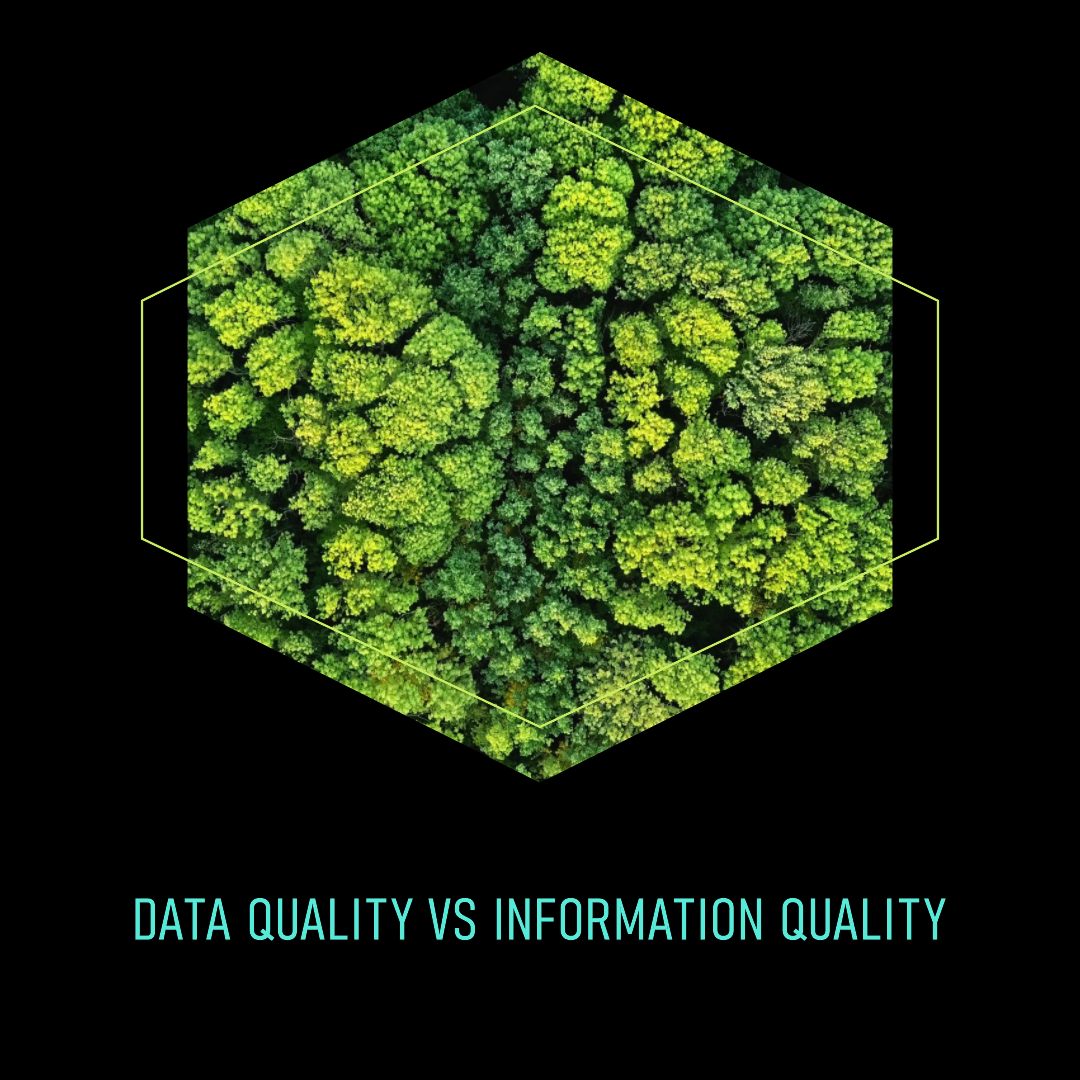
Imagine walking into a vast wood, where all you can see are countless trees.
Each tree represents pure data.
However, if you were to view the wood from an aerial photograph, you would get a broader perspective and estimate the number of trees per hectare. This broader view translates into information, but it also means losing the intricate details of individual trees. As data transforms into information, the potential for errors increases.
Investing in the Long Term:
This analogy resonates with the long-term investment nature of data.
Just like a wood that requires maintenance, data that is not properly managed will deteriorate over time.
After a year, signs of decay may start to appear in our young data wood. Although our information remains unchanged, one in ten trees may be rotting from the inside, rendering them unsuitable for lumber.
The Escalation of Problems:
If we ignore the initial signs of infection, the problem will spread.
More trees will be destroyed, and although our information remains intact, its quality will deteriorate.
Initially, our information may be 90% accurate, but as the wood becomes rotten at its core, it will bear no resemblance to reality.
Our information quality will be compromised, and we won’t be able to make informed decisions to salvage the wood and secure our long-term lumber position.
Addressing the Challenges:
There are two approaches we can take to manage the wood effectively.
The reactive approach
The first is a reactive approach, where we may stumble upon the diseased trees by chance, but it will be too late to save them.
In this scenario, we implement a cleansing program, removing the infected specimens through labor-intensive efforts. Although this improves the immediate quality of the wood, it is not repeatable, and we may fail to identify future crises.
The proactive approach
The second approach is a proactive one. We regularly inspect the wood, identifying signs of disease early on.
By taking remedial action promptly and consistently, we ensure the wood remains healthy, and our projected lumber yield stays accurate.
Similarly, to maintain data quality, we need a comprehensive plan.
Regular data quality audits, combined with automated data cleansing, enable us to identify and rectify data quality issues before they become pervasive.
Managing Data Quality for Information Quality:
By actively managing data quality, we can effectively maintain the quality of our information.
Just as a healthy wood yields good lumber, ensuring data integrity leads to valuable and reliable information. Data quality audits and ongoing cleansing efforts become integral to maintaining the integrity and accuracy of our data, ultimately translating into high-quality information that empowers us to make sound decisions.
Follow four essential steps for effectively transforming data into actionable insights for business growth and innovation.
In conclusion, the distinction between data quality and information quality is crucial.
Just as seeing both the wood and the trees provides a comprehensive perspective, recognizing and managing data quality is essential for maintaining the overall quality of information.
Drive positive change in your organization’s data landscape by implementing KPIs and effectively changing data behaviour through KPIs for improved data quality.
 Data Quality Matters
Leave a reply to Alastair Cancel reply