Looking to enhance your data quality? Master Data provides cutting-edge data profiling tools and techniques to streamline your data management processes.
For years, I have been a proponent of data quality measurement.
If you can’t measure it…
Data quality cannot exist without management and, many would argue, without data governance.
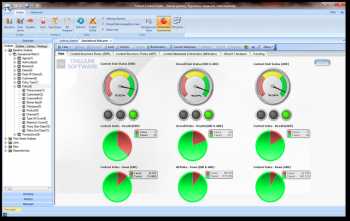
Meaningful data quality metrics play a critical role in managing data quality.
Posts such as Don’t Blow up the Whale; Changing data behaviour through KPIs, and Accuracy, Completeness and Speed of Execution have different takes on this theme.
In recent years more corporations are understanding the importance of metrics in delivering better-quality data.
Indeed, we are currently busy with a data metrics project for a listed South African bank – in this case, to support, amongst other drivers, their BCBS 239 compliance program.
Without metrics, they cannot prove compliance.
More importantly, without metrics they have no meaningful way of prioritising remediation work; they have no understanding of what is causing poor-quality data to be captured; and they cannot plan to improve the quality of data.
Data quality metrics are just the start!
Yet, as important as they are, data quality metrics do not deliver quality data!
While you cannot manage something without measuring it, measuring it is NOT managing it.
Companies need to look beyond metrics to understand how they will deal with the issues identified.
Different approaches to data quality
Some issues may require manual remediation.
Who will deal with the issues raised, how will they be prioritised, tracked and monitored, how will you analyse the root cause of repeating issues, etc?
These are data governance problems that require appropriate structures and a data issue management system.
Some issues must be resolved programmatically.
How will you correct common errors, standardise common fields such as phone numbers, scrub invalid values, add missing information, or match and resolve duplicate records?
Leaving these issues for manual intervention is counterproductive! More errors will be made during the remediation process, the issues will overwhelm your operational staff, and the problems will reoccur in the future. The 1:10:100 rule shows that proactive data quality costs far less than fixing problems later.
Far too often, technology choices are made based on the ability of the IT department to deliver metrics. To solve data quality problems, IT and business users must consider an enterprise data quality capability. This means much more than the ability to deliver metrics.
Elevate your understanding of data governance alongside data profiling through engaging insights from Master Data. Delve deeper into the topic at data governance and data profiling and optimize your data governance practices for better outcomes.
Make informed decisions by comparing SQL, Python, and data profiling tool approaches to data profiling with Master Data’s comprehensive analysis. Explore the insights at comparing SQL, Python and data profiling tool approaches to data profiling and stay ahead in the realm of data management.
 Data Quality Matters
Leave a reply to J Hughes Cancel reply